The Mastery Series • Early Childhood Curriculum
Mastery Series Frequently Asked Questions
Answers to common questions about the Mastery Series Mathematics and Phonics curriculum for Nursery, Preschool and Kindergarten.
The Mastery Series from Liberty Education is a developmental early childhood curriculum covering Mathematics and Phonics across three levels: Nursery, Preschool and Kindergarten.
This page answers common questions about the curriculum structure, progression, Teacher Guides, Student Books and the learning developed across the six Mastery Series programs.
About the Mastery Series
What is the Mastery Series?
The Mastery Series is a developmental early childhood curriculum from Liberty Education for Nursery, Preschool and Kindergarten.
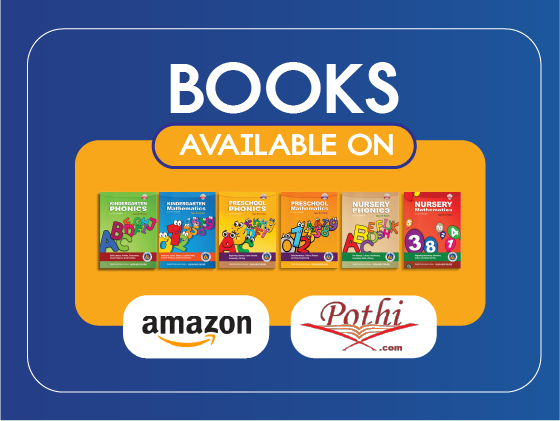
The series provides separate Mathematics and Phonics programs at each developmental level, creating six connected curriculum programs:
What subjects are included in the Mastery Series?
The Mastery Series includes two core curriculum areas: Mathematics and Phonics.
Mathematics develops early number and mathematical understanding, while Phonics develops alphabet, sound, vocabulary, writing and early literacy knowledge.
Both subjects are provided at Nursery, Preschool and Kindergarten levels.
How many programs are in the Mastery Series?
There are six programs: Mathematics and Phonics at each of the three curriculum levels.
The programs are connected developmentally, allowing schools to follow the progression of learning from Nursery through Kindergarten.
Is the Mastery Series a collection of separate books or a connected curriculum?
The six programs can be examined individually, but together they form a connected developmental curriculum.
Concepts introduced at one level are strengthened and extended at later levels. This is particularly clear in the development of number knowledge in Mathematics and letter-sound knowledge in Phonics.
The progression can be viewed in the Mastery Series Scope & Sequence .
What are the three developmental stages of the curriculum?
The curriculum can be viewed as a three-stage developmental pathway:
Nursery: Foundation → Preschool: Development & Application → Kindergarten: Integration & Mastery
This progression reflects increasing expectations for children to move from exploring and recognizing concepts toward applying, connecting and reasoning with what they have learned.
Curriculum Progression
How does learning progress from Nursery to Kindergarten?
The Mastery Series increases the complexity of children's learning across the three levels rather than simply repeating the same content.
In Nursery, children establish foundations through experience, exploration, recognition, naming, matching and guided response.
In Preschool, children strengthen these foundations through identification, discrimination, matching, classification, sequencing, representation and application.
In Kindergarten, children increasingly analyze, compare, connect, read, write, reason and apply what they know.
Where can I see the complete Scope & Sequence?
The Mastery Series Scope & Sequence provides a curriculum-wide overview of Mathematics and Phonics across Nursery, Preschool and Kindergarten.
It is designed to make the continuity between levels visible and to help educators see how major learning strands develop across the series.
Can I see Mathematics and Phonics progression separately?
Yes. Liberty Education provides separate curriculum progression pages for the two subject areas.
The Mathematics Curriculum Progression follows mathematical development from early number, quantity, colors and shapes through comparison, patterns, measurement, early addition and mathematical reasoning.
The Phonics Curriculum Progression follows literacy development from alphabet and sound foundations through sound discrimination, short vowels, blending, rhyming, word families and early word reading.
Does each level build on the previous level?
Yes. The curriculum shows a clear progression in both Mathematics and Phonics.
For example, Mathematics develops from early counting and numeral recognition toward number representation, sequencing, comparison, measurement and early addition.
Phonics develops from alphabet recognition and beginning sounds toward more detailed analysis of sounds within words, including short vowels, ending sounds, blending, rhyming and word families.
Mathematics Curriculum Questions
What does Nursery Mathematics teach?
Nursery Mathematics builds early mathematical foundations through numbers, counting, quantities, number words, colors, shapes, matching, classification, sequencing and mathematical language.
Number learning focuses on numbers 1–10 and includes numeral recognition, counting quantities and emerging numeral formation.
What does Preschool Mathematics teach?
Preschool Mathematics develops number and quantity understanding through 0–10.
Children work with numerals, quantities, number words, sequencing, colors, shapes, sorting, classification and spatial concepts. Activities help children connect different representations of the same mathematical idea.
What does Kindergarten Mathematics teach?
Kindergarten Mathematics extends mathematical learning through numbers 0–20, number order, comparison, patterns, geometry, spatial awareness, measurement, ordinal numbers, time, money, early addition and mathematical reasoning.
Later activities also provide extended counting practice to 100, while the core written number sequence remains focused on 0–20.
Does Kindergarten Mathematics include addition?
Yes. Kindergarten Mathematics includes an explicit introduction to addition.
Children work with concrete and visual representations of quantities before applying addition within simple mathematical activities. The program introduces the plus sign (+), equals sign (=) and the idea of a sum.
Does Kindergarten Mathematics include measurement?
Yes. Kindergarten Mathematics includes measurement activities involving centimeters and the use of a ruler.
Children also work with comparative ideas involving attributes such as size, height and length.
Does the Mathematics curriculum include time and money?
These concepts appear at the Kindergarten level.
Children are introduced to telling time to the hour and work with introductory money and coin activities. Calendar experiences also include days, dates, days of the week and months.
Where can I compare Mathematics across all three levels?
The Mastery Series Mathematics Curriculum Progression compares major Mathematics strands from Nursery through Kindergarten.
Phonics Curriculum Questions
What does Nursery Phonics teach?
Nursery Phonics develops alphabet awareness, uppercase and lowercase letter recognition, letter names, target sounds, beginning-sound vocabulary, oral language, case matching and emerging letter formation.
Children connect letters with familiar vocabulary and learn to listen for target sounds while developing early fine-motor and writing skills.
What does Preschool Phonics teach?
Preschool Phonics strengthens alphabet knowledge, letter-sound relationships, beginning-sound discrimination, vocabulary, oral language, letter formation and cumulative alphabet review.
The program also begins with structured pre-writing preparation, including pencil control and practice with vertical, horizontal, slanting, zigzag, curved and circular lines.
What does Kindergarten Phonics teach?
Kindergarten Phonics extends children's attention from individual letters and beginning sounds to the structure of simple words.
Children work with beginning consonants, the five short vowels, middle short-vowel sounds, ending consonants, blending, familiar simple words, rhyming, sound patterns, word families, writing, sequencing and early comprehension.
Does the Mastery Series teach all five short vowels?
Yes. At Kindergarten level, children work explicitly with the short sounds of a, e, i, o and u.
These vowel sounds are also used as middle sounds within familiar simple words.
Does Kindergarten Phonics include blending?
Yes. Kindergarten activities bring taught consonant and short-vowel sounds together within simple word activities.
This represents an important progression from the earlier emphasis on individual letters, sounds and beginning-sound vocabulary.
Does Kindergarten Phonics include rhyming and word families?
Yes. Children identify and work with rhyming words and recurring sound patterns.
Examples used within the curriculum include patterns such as -at, -ig, -an, -op, -ug and -in. Later word-family activities include focused work with -an and -at.
Does Kindergarten Phonics include comprehension activities?
The Kindergarten program includes early language and comprehension-related activities involving opposites, grouping, before and after, story order and story understanding.
These activities extend phonics learning into meaning, sequencing and language comprehension.
Where can I compare Phonics across all three levels?
The Mastery Series Phonics Curriculum Progression shows how alphabet and sound foundations develop toward sound analysis, blending, rhyming, word families and early word reading.
Teaching & Learning Questions
How is the Mastery Series taught?
The Teacher Guides support learning through a combination of teacher-directed instruction, guided practice and active classroom experiences.
Depending on the lesson and curriculum level, learning may include teacher modeling, discussion, stories, rhymes, songs, movement, manipulatives, games, art, sensory experiences, fine- and gross-motor activities, learning centers and Student Book application.
Is the curriculum only workbook-based?
No. Student Book activities are one part of the learning experience.
Teacher Guide lessons also incorporate oral language, teacher modeling, movement, hands-on materials, games, classroom activities, art, sensory experiences and learning centers.
This allows children to encounter concepts through multiple forms of participation before or alongside written practice.
What is the role of the Teacher Guide?
The Teacher Guide provides the instructional framework surrounding Student Book activities.
Lessons may include learning objectives, introductions, teacher modeling, stories or rhymes, songs and actions, activity choices, Student Book application and suggested learning-center experiences.
The Teacher Guide therefore supports teachers in turning individual book activities into broader classroom learning experiences.
What is the role of the Student Book?
The Student Book provides structured opportunities for children to practice and apply concepts introduced and reinforced through instruction.
Depending on the subject and developmental level, activities may include recognizing, matching, tracing, writing, counting, coloring, identifying, sequencing, completing or applying concepts.
Does the Mastery Series use hands-on learning?
Yes. The Teacher Guides include hands-on experiences alongside Student Book activities.
Examples across the series include manipulatives, counters, sorting and matching materials, movement activities, games, art, sensory experiences, fine-motor activities and learning centers.
Does the curriculum support more than academic learning?
Yes. Activities across the Teacher Guides also engage areas such as language development, fine-motor development, gross-motor development, cognitive development, social-emotional participation and STEAM-related exploration.
These experiences are integrated with the Mathematics and Phonics content rather than replacing the subject-specific learning goals.
Does the curriculum include review and reinforcement?
Yes. Review is built into the curriculum in different ways.
In Phonics, children revisit previously introduced letters and sounds through cumulative review. In Mathematics, concepts such as numbers, colors and shapes are revisited through review and integrated activities.
This helps children reconnect earlier learning with later concepts as they move through the program.
Explore the Mastery Series
Use the following curriculum resources to explore individual programs or compare learning across the complete series.
Individual Curriculum Programs
- Nursery Mathematics
- Nursery Phonics
- Preschool Mathematics
- Preschool Phonics
- Kindergarten Mathematics
- Kindergarten Phonics
Curriculum Planning & Progression
Mastery Series Overview
For an introduction to the complete curriculum, visit the Mastery Series overview.
```